Blog
5 Mistakes People Make When Organising a European Winery Tour Themselves
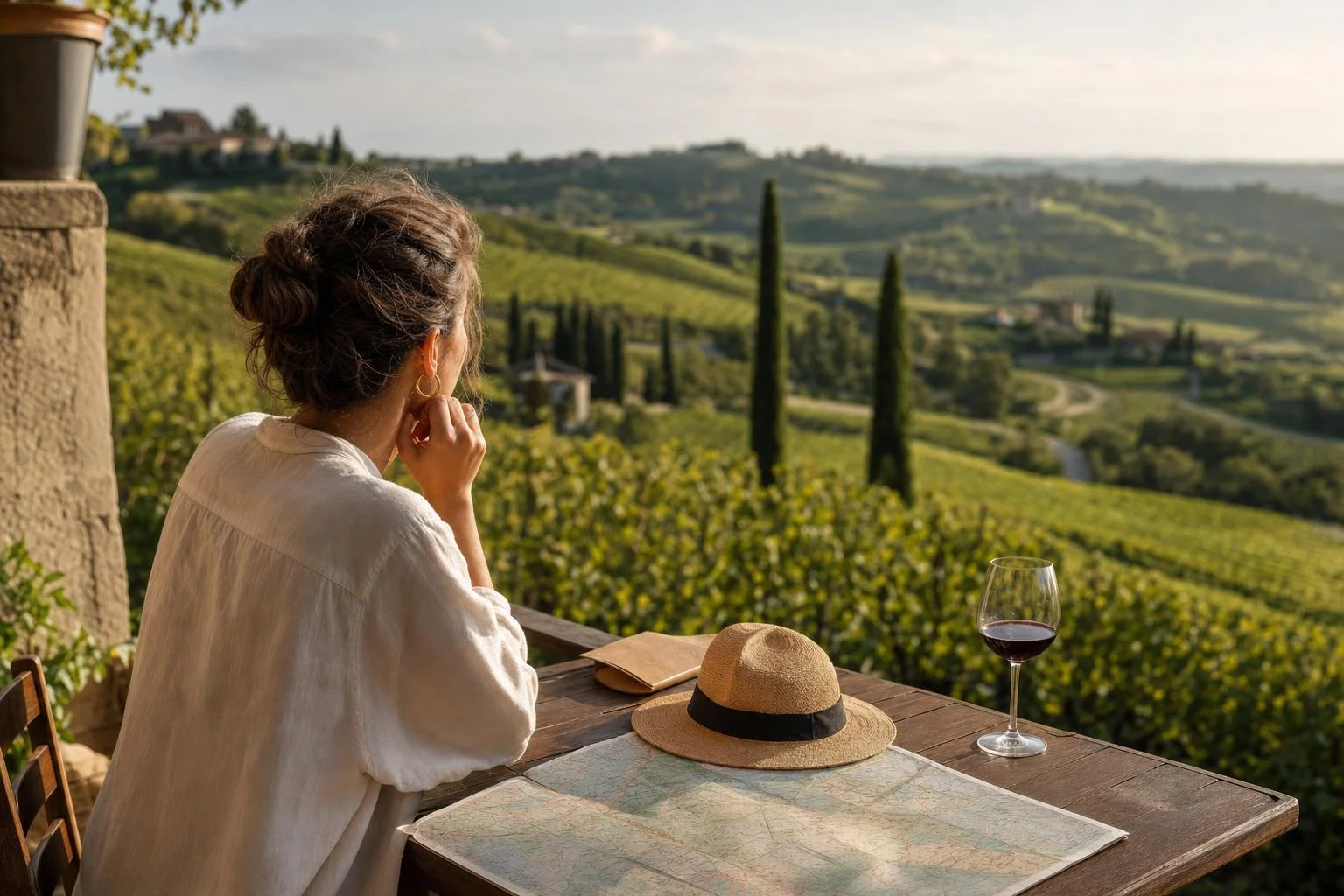
A European winery tour sounds like a dream that is easy to turn into reality: search online, find a handful of addresses, book accommodation and set off. Yet the experience you imagine and the experience you actually have are often two entirely different stories. Behind the inviting websites of wineries and the romantic photographs of vineyards lies a whole series of organisational pitfalls that can ruin, for the unprepared traveller, a holiday that was meant to be unforgettable. In this article we walk through the five most common mistakes people make when planning this kind of journey themselves — and explain precisely why each one stings more than it first appears.
Mistake 1: Contacting Wineries That Do Not Accept Individual Guests
This is perhaps the most frequent and most frustrating trap of self-organisation. Many of Europe's most highly regarded wineries — particularly family estates in Burgundy, Tuscany or Priorat in Spain — do not receive individual guests without an established prior relationship. Their capacity for visits is limited, and preference is always given to distributors, specialist wine journalists and agencies with whom they have worked for years. A traveller who sends them an e-mail without any prior connection will most often receive no reply at all.
A further dimension of this problem is that the wineries which are accessible to individual guests — and promote themselves online — are not necessarily those offering the deepest or most authentic experience. Tasting visits open to everyone are frequently standardised programmes designed to accommodate large numbers of visitors, with a pre-prepared guide's speech and minimal contact with the owner or winemaker. You may taste fine wines, yet the story behind them remains hidden.
Expertly organised travel relies on a network of contacts built up over many years. An acquaintance with a winemaker who does not ordinarily open their doors to visitors, a recommendation from a local sommelier, or a long-standing relationship with a particular cellar is the difference between a visit that fades from memory and one that is talked about for years. Access that does not appear in any brochure — that is what makes a truly exceptional winery tour.
Mistake 2: A Poor Tasting Schedule — Too Much in a Single Day
Enthusiasm is a wonderful thing, but when it becomes an itinerary of five or six tastings in one day, it turns against the very experience it was meant to serve. The palate tires quickly — experts suggest that after the third or fourth serious tasting, one's ability to distinguish flavours, aromas and the subtler characteristics of a wine diminishes considerably. Everything that follows becomes a mechanical sip, devoid of any real understanding of what one is drinking.
Besides the physiological constraint, there is also a problem of time. Every quality visit to a cellar or vineyard requires space for conversation, a walk between the rows, questions and spontaneous moments — and these cannot be compressed into a thirty-minute slot. When you try to squeeze too many visits into a single day, each one becomes superficial. You arrive, you taste, you leave. The story remains untold.
A professionally composed itinerary takes the rhythm of travel into account. Two to three visits per day with sufficient time between them, including a lunch break with local produce and the region's wine, yield an entirely different result. Wine is not merely a liquid in a glass — it is context, soil, climate, the person who made it. All of that takes time, and time is a resource that must not be sacrificed in favour of a long list of destinations.
An additional problem with a poor schedule is the driving. Wineries in Tuscany, Alsace or along the Rhine are not always within easy reach, and underestimating the distances between visits is one of the most common causes of delays, stress and missed reservations. The road between two places that look close on a map can take an hour and a half due to winding country lanes — which means that a traveller who is also the driver cannot even taste wine as freely as they would wish.
Mistake 3: Ignoring the season — or choosing the wrong timing for the harvest
Seasonality is the foundation of the viticultural calendar, yet many travellers plan their trip with no regard for what is actually happening in the vineyards at a given time of year. There is a widespread belief that autumn is always the perfect time to visit wineries because the harvest is under way. That is partly true — but only for certain regions and certain varieties. The harvest in Alsace does not take place at the same time as in Priorat. The harvest in Istria may be a week or two ahead of the harvest in Chianti Classico.
If you arrive a week too late, the vineyard has already been picked and the winemaker is in the middle of fermentation — meaning they are both physically and mentally unavailable to guests. If you arrive a week too early, the vines are still green and the romantic harvest scene that inspired the trip simply does not exist. Aligning the timing of your journey with the true rhythm of the specific wineries you plan to visit requires knowledge that cannot be acquired through a Google search.
On the other hand, there are periods that tourists underestimate yet which offer an exceptionally rich experience. Late winter and early spring, when the vines are pruned and the season is being planned, are a quiet time in which the winemaker has the space for conversation and a detailed tour of the cellar. Midsummer brings vibrancy, but also crowds in popular regions such as Provence or Bordeaux. Knowing when to go is just as important as knowing where to go.
A professional travel organiser who follows the viticultural calendar across the whole of Europe can advise you on the right timing for each destination on your list — and even suggest alternative regions if your preferred dates do not coincide with the finest experiences in your original destination. That is knowledge that cannot be replaced by even the most thorough browsing of travel forums.
Mistake 4: Overlooking accommodation and gastronomic context
A journey through wine country is not solely about what is in the glass — it is a complete experience that includes where you sleep, what you eat and how you return to your room in the evening. Many travellers who plan such trips independently focus exclusively on their list of wineries, while choosing accommodation by price or proximity to a town centre, giving no thought to how far that places them from the vineyards they intend to visit or what the gastronomic scene in the area has to offer.
An agriturismo set within a vineyard, a small family-run hotel in a village serving breakfast with local cheeses and cured meats, or a boutique property whose owner can recommend a restaurant where the chef pairs local wines with indigenous dishes — these are experiences that transform travel entirely. Sleeping in a vineyard and waking to the scent of grass and soil is simply not the same as arriving by coach from a hotel in the nearest town.
The gastronomic dimension is equally important. Wine and food are not separate worlds — every region has its own cuisine that evolved alongside its wines, and that makes each better in combination. To taste Barolo without tajarin with truffles, or Riesling without the freshwater river dishes of the Rhine Valley, is to miss half the story. Knowing where to eat, who is cooking and what to order is not a trivial matter — it is part of the journey itself.
The independent traveller who is unfamiliar with the local scene will more often than not end up in restaurants that are visible to tourists, rather than those frequented by winemakers and discerning locals. The difference in quality, authenticity and price can be dramatic. An expert organiser who knows the region knows which restaurant to call, knows how to secure a good table — and in good time — and knows how to weave it all into a coherent day with a beginning, a middle and an end worthy of the memory.
Mistake 5: The absence of an expert guide — and why it is a costly saving
The easiest saving when organising a trip independently is to forgo a specialist guide. Why pay for a sommelier or curator when you can walk through a cellar and read the labels yourself? This logic holds if the purpose of the journey is sightseeing in a broad sense — but if the aim is to understand wine, culture and place, then setting off without an expert means you will see a great deal and understand very little.
A sommelier guiding you through a tasting is not reading the label — he or she is speaking with the winemaker in their own language, asking questions you would not have known to ask, translating the nuances of a vintage and a soil into a context that means something to you, and noticing details that are invisible to the uninitiated eye. The same principle applies to a curator leading you through a gallery: the difference between looking at a painting and understanding it is precisely that voice which knows what it is looking at.
On journeys that combine wine and art — such as visits to wineries that house or exhibit contemporary or classical works within their own spaces, or itineraries that pair a morning gallery visit with an afternoon in the cellar — a specialist guide is the bridge between two worlds. Without one, both experiences remain isolated fragments rather than a whole that carries shared meaning and a coherent narrative.
The cost of a specialist guide almost invariably repays itself in the form of access you would not otherwise receive: private tastings, visits to parts of a cellar not open to the public, conversations with the winemaker that fall outside the standard programme, or recommendations for your next journey based on the wines that moved you most. These are not luxuries — they are the very foundation of an experience genuinely worth remembering.
What a journey looks like when all of this is avoided
Imagine visiting a small family estate in Istria or Burgundy and being welcomed by the winemaker in person — not because you submitted a reservation request through a website, but because someone vouched for you personally. The cellar you step into is not a tourist circuit, but a working space where wine is still ageing in barrel and the air carries the scent of the seasons. The sommelier at your side interprets every sip in the context of the soil, the climate of that particular year and the winemaker's personal style. This is not a tour — it is a conversation.
In the afternoon you are at a restaurant that appears in no tourist guide, yet every winemaker in the region knows it. The food and wine have been arranged in advance, because the organiser knows what you tasted that morning and what would round off the day beautifully. The accommodation you return to is part of the same story — a building with centuries of history, a bed that smells of lavender, and the owner's wine cellar available for an evening glass, with no pressure whatsoever.
The following day has a different rhythm, because someone has composed it thoughtfully: one morning experience in the vineyard, an afternoon pause, and then a visit to a gallery or the studio of a local artist whose work is inspired by the very same provinces and landscapes that gave rise to the wines you tasted. At the end of the journey you leave with more than a list of wines and photographs — you carry an experience that cannot be repeated, because it was assembled entirely for you.
The gap between the journey you imagined and the journey you actually lived is then minimal — because someone who knows both the people and the places and the rhythms of the season stood between your idea and reality, and turned one into the other. That is work worth entrusting to those who know how to do it.
- Access to wineries that do not receive individual guests — thanks to a trusted network of contacts
- An itinerary that respects the rhythm of the palate, the body, and the season
- Accommodation and gastronomy as an integral part of the travel experience
- An expert companion who transforms a tasting into genuine understanding
- Flexibility when plans change — without stress or logistical panic
Each of these five mistakes can be avoided — but doing so requires either a great deal of time and insider knowledge, or someone who already possesses that knowledge and places it at your disposal. Artvino & Co. builds journeys to European wineries and galleries on precisely that foundation: personal connections, experience, and meticulous attention to every detail that makes the difference between a tour and a truly memorable encounter. If you have an idea, a set of dates, or simply a vague sense of where you might like to go — get in touch. Together we will put together an itinerary that begins where the mistakes end.
Frequently asked questions
Can I book visits to well-known European wineries on my own?
Some wineries operate an open booking system for individual guests, but many of the most acclaimed and most interesting — particularly family estates in Burgundy, Tuscany, or Istria — do not receive visitors without a personal recommendation or an established relationship. That is precisely the difference a specialist travel organiser with a proven network of contacts can make.
How many winery visits is the ideal number for a single day?
Two to three visits per day, with enough time between them, is the ideal pace for a serious wine journey. Any more than that tires the palate and leaves no room for conversation, a walk through the vineyard, and those spontaneous moments that make an experience truly unforgettable.
What is the finest time of year to travel through European wine regions?
It depends on the region and what you wish to experience. Harvest is spectacular, but the timing differs across Europe. Late winter and spring offer quieter experiences, with winemakers more readily available. A professional organiser can align your dates with the true rhythm of each specific destination.
Do I need a sommelier on a winery journey if I already know something about wine?
A sommelier is not merely a translator of labels — he or she opens doors that would otherwise remain closed, asks the questions that prompt winemakers to speak candidly, and transforms a tasting into an understanding of context. Even seasoned wine enthusiasts report that an expert companion entirely changes the depth of the experience.
Do you have an idea for a journey through European wineries? Contact Artvino & Co. and we will craft an itinerary tailored precisely to your wishes, pace and dates.
Request a Quote