Blog
Which European wine regions also have an exceptional art scene: a guide for true connoisseurs
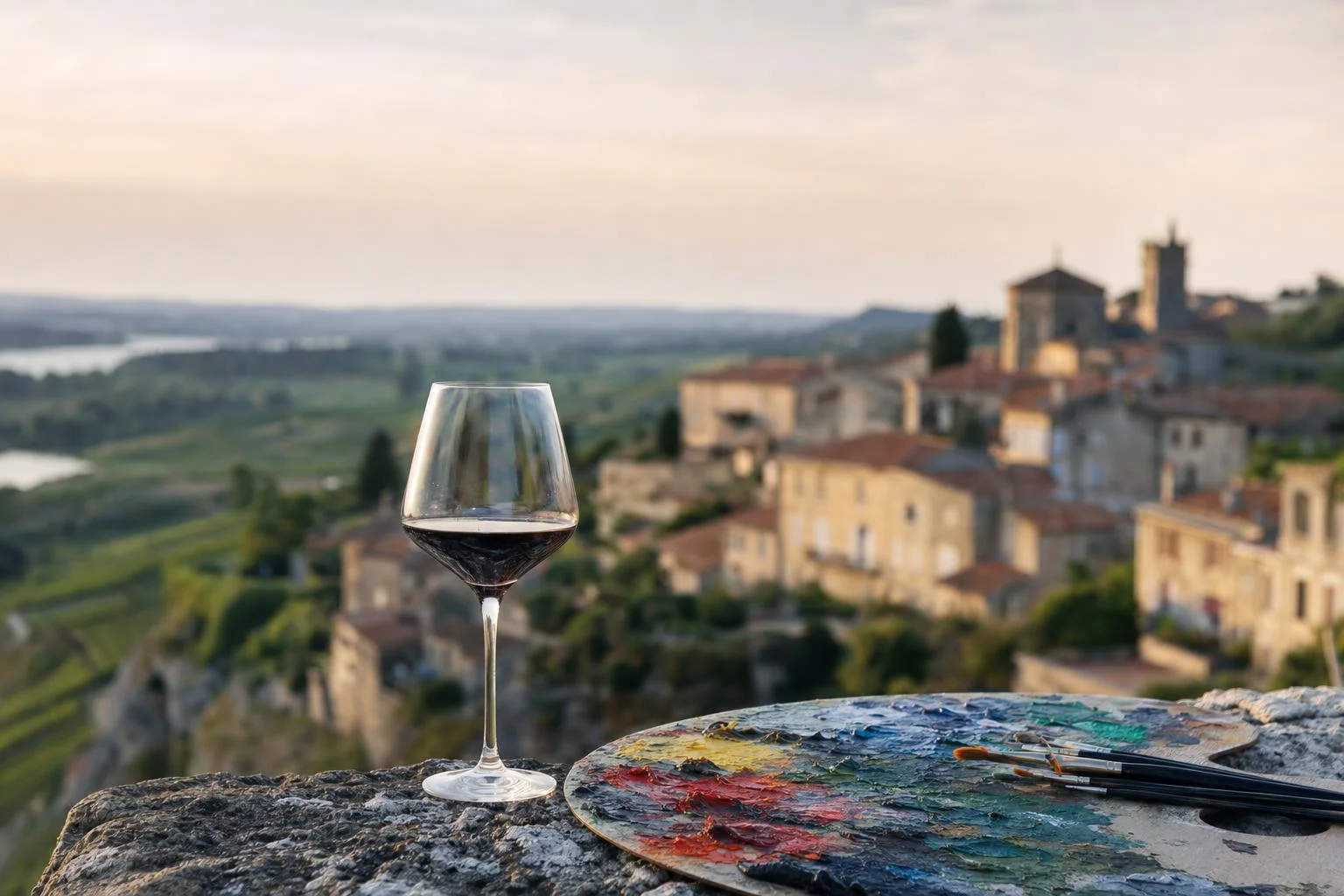
There is a particular kind of traveller who never chooses between a glass of exceptional wine and a visit to a gallery — because they know that a truly memorable moment can encompass both. Europe is, fortunately, a continent where wine regions and cultural heritage overlap with remarkable frequency: the very landscapes that inspired painters for centuries have also nurtured the vineyards that today yield outstanding varieties. This guide is intended precisely for such connoisseurs — those who travel with open senses and wish to understand which European region offers a genuine fusion of winemaking tradition and a vibrant art scene, and which of those regions best suits their particular profile and interests.
Istria: a Mediterranean spirit, innovative wines and contemporary art
Istria, beyond everything it offers as a gastronomic destination, has also become one of the most compelling settings for an encounter between the contemporary art scene and indigenous wines. The peninsula is home to varieties such as Malvasia Istriana and Teran, and a growing number of wineries are creating spaces that function in their own right as architectural landmarks worth visiting — from minimalist cellars hewn into living rock to open terraces offering simultaneous views of the sea and the vineyards.
The hilltop town of Motovun, surrounded by vineyards, is host to one of the most celebrated film festivals in the region, as well as an increasingly developed scene of art galleries and studios working with local and international artists. Rovinj, on the other hand, has an exceptionally lively gallery quarter along the waterfront — where it is possible in a single afternoon to visit an exhibition of contemporary sculpture and then settle on a winery terrace with a glass of Malvasia. That rhythm is no accident: Istria is actively developing high-end cultural tourism.
For travellers who are drawn to contemporary art and experimental formats — installations, site-specific works, photography — Istria is an ideal starting point. Here one can still sense an authenticity that has not been overwhelmed by mass tourism, and the wineries are often family-run, with winemakers who personally guide visitors through the cellar and share stories about the terroir. That kind of immediate connection with a place and its people is difficult to find in such undiluted form anywhere else in Europe.
Tuscany: old masters, Renaissance heritage and Sangiovese
Few destinations in the world can claim such a density of cultural heritage within a single wine region. The Chianti Classico zone, stretching between Florence and Siena, is not only home to Sangiovese and Brunello — it is also the landscape described by Dante and Boccaccio, painted by Leonardo and Botticelli, and one that continues to captivate with its unaltered beauty. Winery visits here almost invariably include a walk through a vineyard that extends to a fifteenth-century chapel or a country estate whose walls are adorned with frescoes.
Siena is the cultural heart of this part of Tuscany: its Museo dell'Opera and Pinacoteca Nazionale house some of the most significant works of the Sienese school of painting, from Duccio to Ambrogio Lorenzetti. The opportunity to spend two hours in those collections in the morning, then taste Brunello di Montalcino in the cellar of a winery whose history stretches back to the thirteenth century, is an experience that unites sensory and intellectual pleasure in a rarely achieved way.
Tuscany is particularly recommended for travellers who love the Old Masters, the Renaissance and the Italian primitives — but also for those with an interest in architecture. Many wineries are housed in so-called borghi (fortified villages) or villas that are architectural gems in their own right. This is not a destination for a superficial passing visit: it rewards slower travel, longer stays, and a willingness to turn off the main road towards a smaller town that does not appear on the usual lists.
Alsace: Gothic cathedrals, Art Nouveau and aromatic white wines
Alsace is a region that is often overlooked on wine journeys, and that is precisely why true connoisseurs hold it in particular esteem. Nestled between the Vosges and the Rhine, this French region has preserved an almost untouched mediaeval architecture: the small town of Colmar, with its canals and half-timbered houses, is known as 'Little Venice', while Strasbourg, with its Cathedral of Notre-Dame, offers one of the finest examples of Gothic architecture in Europe. The wine route — the Route des Vins d'Alsace — is one of the most beautiful and longest-established wine routes on the continent, winding through a succession of villages that look as though they have stepped out of an illustrated book of fairy tales.
Yet Alsace is not merely a charming façade: Strasbourg is also home to the Museum of Modern and Contemporary Art, which holds a remarkable collection of Expressionism, Bauhaus and Dadaism, featuring Klee, Kandinsky and Arp. The region itself was the birthplace of Hans Arp, one of the founders of Dadaism, whose work permeates the cultural identity of the area. For travellers who, alongside architecture and historic craftsmanship, seek a modern counterpoint, Alsace offers precisely that contrast — and makes it a compelling one.
The wines of Alsace — Riesling, Gewürztraminer, Pinot Gris — are aromatic and structured in a way perfectly suited to a cooler climate. Winery visits here are frequently family endeavours spanning generations: connoisseurs value the opportunity to speak with winemakers who are not dependent on mass tourism and who are happy to share details about the microterroir distinctions between individual Grands Crus. The combination of an intimate winemaking experience and a rich cultural context makes Alsace an exceptionally rewarding destination for those who are unwilling to compromise.
The Douro Valley: a dramatic landscape, Baroque splendour and captivating port
The Douro Valley in Portugal is inscribed on UNESCO's World Heritage List — and with good reason. The terraced vineyards carved into the granite slopes along the River Douro are visually among the most breathtaking sights in all of Europe, and this landscape is itself a work of art shaped by human hands over more than two millennia of vine cultivation. Port, which is produced here, is not merely a drink — it is a cultural artefact, history in a glass, the result of a specific knowledge passed down from generation to generation.
Porto, at the mouth of the river, is the natural base for this journey. Over the past decade, the city has undergone a remarkable cultural transformation: the Fundação Serralves, with its Museu de Arte Contemporânea and the park designed by Álvaro Siza Vieira, is one of the finest examples of museum architecture in Europe, and Porto's contemporary art scene flourishes in former industrial spaces and independent galleries. The azulejos adorning the façades of churches and palaces — most notably the celebrated Igreja de São Ildefonso — offer a singular perspective on the relationship between decorative and fine art.
For travellers drawn to dramatic landscapes, baroque religious architecture, and the stories of the long cultural exchange between Portugal and Britain (which shaped the entire history of port wine), the Douro Valley offers an incomparable experience. Combine visits to quintas — ancient estates along the riverbanks — with a visit to the Serralves or the Museu Nacional Soares dos Reis, and you will find yourself on a journey that brings together almost every dimension of European cultural memory.
- Quintas along the River Douro: estate architecture from the 17th to the 19th century
- Fundação Serralves: contemporary art and Álvaro Siza's museum
- Porto's azulejos: a decorative heritage as public gallery
- Port lodges of Vila Nova de Gaia: the history of winemaking, one step at a time
Burgundy: Romanesque architecture, Impressionism, and Pinot Noir on a pedestal
For many wine lovers, Burgundy is hallowed ground. Grands Crus such as Romanée-Conti, Chambertin, or Montrachet are not merely labels — they are geographical points of near-mythical standing, each defined by precisely delineated parcels mapped with a rigour that few other wine regions can match. Understanding the concept of terroir becomes here an almost philosophical question: how do soil, slope, aspect, and microclimate together create something utterly unrepeatable?
Yet Burgundy is far more than wine. The Romanesque architecture of this region is of exceptional quality: the Abbey of Cluny, which was the largest church in the world before the construction of St Peter's in Rome, Vézelay with its Basilica of St Mary Magdalene, and the small Romanesque chapels scattered across the villages between Dijon and Beaune — all of this forms a cultural backdrop of equal worth to the vineyards. Beaune itself, with its celebrated Hôtel-Dieu and its magnificent auction hall, is an architectural masterpiece of Flemish Gothic on French soil.
For lovers of Impressionism, there is a particular reason to visit: Dijon and its surroundings were the milieu of a number of painters who influenced the development of modern art, and the Musée des Beaux-Arts in Dijon holds a remarkable collection ranging from 14th-century Burgundian sculpture to modern canvases. A traveller who spends a morning in the Musée des Beaux-Arts, then visits a domaine in Gevrey-Chambertin, and dines over a bottle of Premier Cru in one of the local bistros — that traveller understands why Burgundy is a destination to which one always returns.
How to choose the right destination for your traveller profile
Each of these five destinations offers a different balance of experiences, and each appeals to a somewhat different kind of traveller. Not every destination is perfect for everyone — and that is precisely why it is worth reflecting on your own priorities before you decide on a direction. Ask yourself specific questions: Am I drawn more to contemporary or classical art? Do I prefer a dramatic landscape or an intimate Mediterranean scale? Does architecture interest me more than painting? Do I favour white wines, or do I always find myself returning to red?
If your passion is contemporary art and experimental approaches, Istria and Porto offer the right context — both have living scenes that are still evolving and have not been overwhelmed by tourist-oriented formats. If the Renaissance and Old Masters are your calling, Tuscany is unavoidable, though that comes with the obligation to avoid peak seasons and to dedicate sufficient days to each individual city. For lovers of Gothic architecture, Baroque and aromatic white wines, Alsace is a hidden gem that rewards those who take the time to discover it.
Burgundy and the Douro Valley are destinations for travellers who are already familiar with the fundamentals and wish to go deeper — into concepts such as terroir, the vinification of ancient varieties, or the relationship between heritage and contemporary creativity. Both require a little more prior knowledge for the experience to truly shine, but that is precisely why the reward is proportionally greater. Whichever region you choose, one thing is essential: do not rush. True connoisseurs travel slowly.
- Contemporary art and younger wineries: Istria, Porto
- The Renaissance and Old Masters: Tuscany
- Gothic and Romanesque architecture: Alsace, Burgundy
- Dramatic landscapes and Baroque: Douro Valley
- Deep insight into terroir and the classics: Burgundy
Practical tips for planning a wine-and-art journey
Planning this kind of journey requires a different approach from a standard city break. Wineries, particularly those at the higher end, often do not accept visitors without a prior reservation — sometimes made weeks in advance. Museum collections may be partially closed for restoration or temporary installations. It is therefore essential to do thorough research, or to engage someone who already has those connections in place. Spontaneity is precious, but only when the foundations have been carefully planned.
Season matters more than it might seem. Harvest time (September–October) is the most compelling period in almost every wine-growing region — but also the busiest. Late spring (May–June) offers quieter conditions, verdant vineyards and open museums free of crowds. Winter has its own charm in Alsace and Burgundy, though some wineries reduce their opening hours at that time of year. Plan according to what matters more to you: the wine season, or unimpeded access to cultural institutions.
Transport between destinations is not straightforward. Some of the finest wineries and galleries lie well off the main routes — between Dijon and the villages of the Côte d'Or, or between Porto and the quintas deep in the Douro Valley. Having your own car is a considerable advantage, but for those who prefer not to drive, a truly curated programme means organised transfers that form part of the experience rather than a logistical headache. Lunch in a vineyard, a river crossing, an evening stroll through an old town — all of this requires someone to think ahead on your behalf.
Europe is full of places where wine and art meet — but the destinations described in this guide are special precisely because that meeting is neither accidental nor superficial. It is embedded in the very fabric of the place, in its history, its landscape and the people who tend it. If you have identified a destination that resonates with you, or are still wondering what your ideal combination of wineries and galleries might be, do get in touch with your ideas and wishes. At Artvino & Co. we build every itinerary from scratch — tailored to your taste, pace and dates — and we take care of every detail so that you can simply enjoy the journey.
Frequently asked questions
Which European destination is best for travellers who love both wine and contemporary art?
Istria and Porto (the Douro Valley) currently offer the most dynamic fusion of a contemporary art scene and outstanding small wineries. Both destinations have a vibrant gallery scene that is not overwhelmed by mass tourism, and the wineries are small enough to offer a genuinely personal experience.
When is the best time to visit wine-growing regions for both the wine and the cultural events?
Late spring (May–June) is ideal for most destinations: the vineyards are green and at their most attractive, museums and galleries are operating at full capacity, and the crowds are far smaller than during the summer season or harvest time.
Should winery visits at prestigious locations such as Burgundy be booked in advance?
Absolutely. Prestigious domaines in Burgundy, as well as many wineries in Tuscany and the Douro Valley, receive visitors strictly by prior arrangement — sometimes weeks or even months ahead. Without a strong network of contacts or an expert organiser, many of the most rewarding visits are simply not accessible.
Can a single journey be combined across several destinations — for example, Istria and Tuscany?
Yes, and such journeys are particularly rich in experience — though they require careful planning to ensure the pace is comfortable rather than exhausting. A combination of two destinations works best when the trip lasts at least eight to ten days, with enough free afternoons for spontaneous discoveries.
Have an idea for a journey, or simply not sure where to begin? Write to us or give us a call — we will design an itinerary tailored precisely to you and your interests.
Request a personalised itinerary