Blog
October in Burgundy and Alsace: what the journey brings after the harvest is over
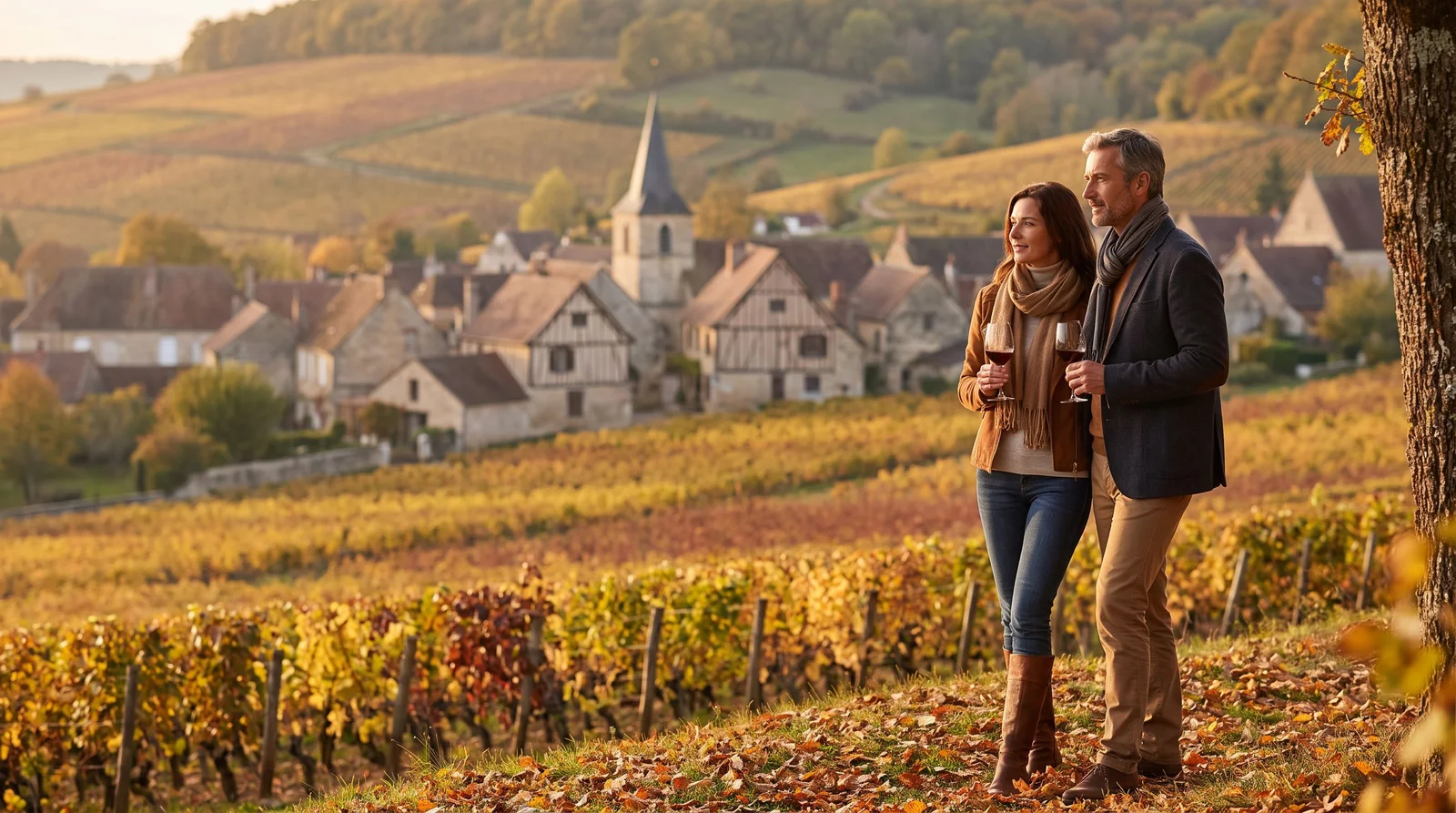
While August and September belong to the rush, the scent of must and hands that barely get a moment's rest, October in Burgundy and Alsace brings an entirely different rhythm. The harvest is behind the winemakers, the vats in the cellars quietly do their work, and the vineyards change into colours that painters and photographers chase all year round. For the traveller who loves wine, art and unhurried peace, this is the month when the doors of wineries open wider and conversations last longer. Below is a seasonal guide to what truly awaits you on the ground — and how best to prepare for it.
Why October is a turning point in the vineyards
The grape harvest in Burgundy and Alsace usually takes place during September, though depending on the vintage and climatic conditions it can stretch into the first days of October. As soon as the last crate of grapes is unloaded into the press, the winery enters the second phase of the year — a quieter, more introspective one, in which the must is transformed into wine through careful monitoring of temperature, fermentation and the first signs of the future vintage's character. This is the moment when the winemaker finally exhales.
Unlike September, when winemakers are literally racing against time and the weather, October brings work that unfolds more slowly and more in the cellar than in the vineyard. This means hosts are more available, more open to conversation, and more willing to spend an hour or two explaining to guests the process that has just come to an end. Many winemakers at this time are happy to share samples of young must straight from the vat — an experience that is almost unimaginable at the peak of the season due to lack of time.
This change of rhythm can be felt in the places themselves too. Tourist crowds thin out, restaurants and taverns return to a local pace, and accommodation prices generally become more favourable than at the height of the season. It is precisely this combination — fewer people, more attention, lower prices — that makes October one of the best-kept moments in the wine traveller's calendar.
Burgundy in October: golden vineyards and quieter cellars
Burgundy is a region where terroir is experienced almost religiously — every parcel, every climat, every slope of the hill has its own name and its own story. In October, the vine leaves turn from green into shades of gold, copper and russet red, and the hills of the Côte de Nuits and Côte de Beaune become scenes worthy of a canvas. Mornings are misty and cooler, afternoons often sunny, creating a light that photographers and painters particularly treasure.
In the cellars along the Côte d'Or, this is the period when winemakers work on maceration, the first pressings and the monitoring of alcoholic fermentation. Guests who come at this time often have the chance to taste wine at its earliest, rawest stage — cloudy, sweetish, full of sugar only just turning into alcohol. It is an educational experience that helps one understand why wine is spoken of as a living process, rather than a finished product that simply appears on a shelf.
Fewer buses with organised groups also means that family-run wineries in villages such as Gevrey-Chambertin, Vosne-Romanée or Meursault have more time to devote to individual guests. Many winemakers during this period are happy to lead visitors through the vineyard itself, showing plots that have just been harvested and explaining the differences between neighbouring climats which, though only a few metres apart, produce entirely different wines.
Alsace in October: colours, wind and doors that open
Alsace, nestled at the foot of the Vosges, offers an atmosphere quite different from Burgundian restraint. Colourful half-timbered houses, narrow lanes and vineyards climbing the hillsides make this region one of the most visually rich in France, and October further highlights this beauty through a palette of autumn colours stretching from Riesling to Gewürztraminer.
This region is known for the so-called Route des Vins d'Alsace, a route connecting dozens of small wine villages — from Riquewihr to Ribeauvillé and Eguisheim. In October these villages are quieter, free of the summer crowds, and local winemakers, many of whom are family producers in their sixth or seventh generation, are happy to welcome guests for tastings that also include the story of the specific soils — schist, limestone, granite — that make Alsace so diverse despite its small area.
October is also the month when smaller, local harvest celebrations and wine festivals take place in villages throughout Alsace, often without major tourist promotion. For the traveller seeking authenticity, this is an opportunity to take part in something that was not designed for tourists, but is part of the community's genuine annual rhythm.
Weather and clothing: how to prepare for the autumn terrain
October in eastern France can be changeable — mornings are cold, often with fog, while afternoons can warm up to a pleasant 15 to 18 degrees. Temperatures gradually drop towards the end of the month, and rain, especially in Alsace due to the proximity of the mountains, is a real possibility almost every day. That is why layered clothing is a necessity, not a style choice.
We recommend a thin, wind- and rain-resistant jacket, comfortable footwear with good grip for walking through vineyards that are often still damp or muddy after the harvest, and a light scarf or hat for morning tours of cellars where the temperature can be a few degrees lower than outside. Cellars in Burgundy, especially the older ones carved into limestone, can also be damp, so it is wise to pack a spare set of dry clothes.
Light in October is short — dusk falls earlier than in summer — which in practice means that the daily schedule of visits needs to be planned more carefully. If the trip also includes photographing the vineyards in golden light, it is best to plan this early in the morning or an hour or two before sunset, when the light is softest and most photogenic.
Bookings in the last wave of the season: what to pay attention to
Although October is quieter than the peak of the summer season, this does not mean that bookings can be left to chance. Many smaller, family-run wineries operate on a 'by appointment only' basis, especially since they have just come out of harvest and organise their time more flexibly. Without prior arrangement, it can easily happen that the winemaker is not in the cellar that day at all, but out in the vineyard or on the way to meet a buyer.
Restaurants and taverns in smaller towns also often operate reduced hours outside the peak season, and some close for one or two days a week. We recommend checking opening hours in advance and booking a table at least a day ahead, especially for dinners at sought-after restaurants with a local, seasonal menu that in October includes game, mushrooms and the first chestnuts.
Accommodation in October offers a wider choice than in summer, but smaller boutique hotels and guesthouses in wine-growing villages still have a limited number of rooms, so booking in advance remains advisable, particularly for weekends when local residents and regional guests come to visit. In late October some wineries begin preparing for their winter break, so it is worth checking up to which date tastings and visits are still regularly available before the cellars settle into a quieter winter rhythm.
The combination of wine and art in an autumn setting
Burgundy and Alsace are not just wine regions — both have a rich artistic and architectural heritage that takes on a special dimension in the autumn light. Dijon, the capital of Burgundy, is home to excellent museums and galleries with works ranging from the Middle Ages to modern art, while smaller towns such as Beaune offer architecture that is itself like an exhibit — the colourful tiled roof of the Hôtel-Dieu is one of the region's most photographed sights.
In Alsace, towns such as Colmar have inspired generations of artists with their colour-rich architecture, and local galleries often mount new autumn exhibitions tied to the harvest, the landscape and wine culture. The combination of a morning cellar visit and an afternoon at a gallery or museum fits perfectly into the slower, more contemplative pace that October naturally brings.
It is precisely this synergy — quieter cellars in the morning, art in the afternoon, a long wine-paired dinner in the evening — that makes an October journey through these regions a particularly rich experience for travellers seeking more than mere wine tasting. It is the month in which the story of wine and the story of culture naturally come together as one.
October rewards those who love to travel outside the peak season — it offers calm, space for conversation, and sights that stay in the memory longer than any bottle brought home. In this month, Burgundy and Alsace reveal their quieter, more genuine face, one that is difficult to experience amid the summer crowds or the September harvest rush. If a journey like this sounds appealing to you, we would be glad to design an itinerary with you that brings together the right winemakers, the right galleries and the right time for both.
Frequently asked questions
Is October too late to visit wineries after the harvest?
On the contrary — October is an ideal time, as winemakers have more time for guests, and you can also taste the first young musts still undergoing fermentation. Visits are less hurried and much more substantial.
How unpredictable is the weather in Burgundy and Alsace in October?
It is changeable — cold, foggy mornings and sunny afternoons are common, and rain is a real possibility almost every day, especially in Alsace due to its proximity to the Vosges. Layered clothing and a waterproof jacket are essential.
Should winery visits be booked in advance in October?
Yes, although the season is quieter, smaller family wineries mostly operate by appointment, as they have just come out of the harvest and organise their time flexibly. Booking a few days in advance ensures the winemaker is available.
What is better to visit in October — Burgundy or Alsace?
Both regions have a strong autumn charm, but offer different experiences: Burgundy is more restrained and focused on terroir, while Alsace brings picturesque colours, winds from the Vosges and a more relaxed, rural atmosphere. The ideal itinerary combines both.
If you're thinking about an autumn journey through Burgundy and Alsace, get in touch with your tentative dates and interests — we will design an itinerary that follows your pace, from quiet cellars to nearby galleries.
Request an itinerary