Blog
Harvest in September: How to Fit into a Winery During the Busiest Time of Year
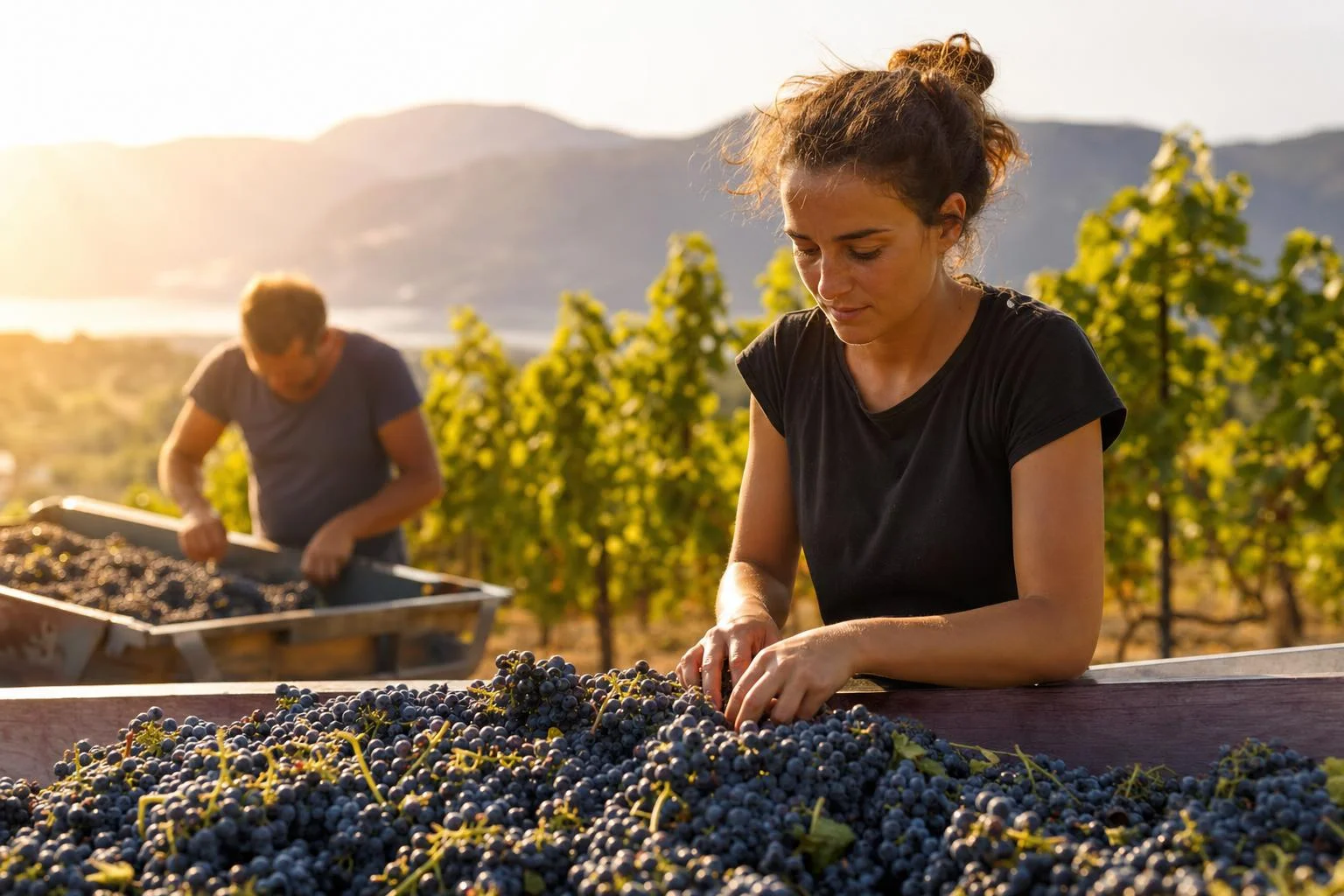
September sounds to many like the perfect month for a winery visit — the sun is still warm, the vine rows are heavy with clusters, and the air smells of must. And it truly is a special moment in the year. Yet few know that it is also the most intense, least predictable and logistically most demanding period for any winemaker. The harvest does not wait for visitors — it waits for weather conditions, sugar levels in the berries and available labour, which means that visiting a winery at this time requires a completely different approach to planning than, say, a calm visit in May or October.
Why September is completely different from the rest of the year
In most European wine regions — Istria, Tuscany, Burgundy, the Rhine Valley — September is the month in which the fate of an entire year's work is decided. The winemaker monitors sugar, acidity and the health of the berries almost daily, and the harvest date is often set only a few days in advance, depending on the weather. This means that during this period a winery does not operate on a predetermined schedule, but reacts to what nature dictates.
For a visitor, this practically means one thing: a touring schedule that was flexible and relaxed in May becomes a narrow and precious window of time in September. A winemaker who can host you for three hours and take you through the entire cellar in March may, in September, only be able to spare an hour between two truckloads of grapes. This is not neglect of the guest — quite the opposite; it is simply the reality of a job in which an entire year's production takes place within a window of just a few weeks.
The good news is that this rush also carries a special energy that a guest can feel and appreciate — provided they know what to expect and that the programme is adapted to the circumstances, rather than the other way round.
What you can really experience during the harvest
A September winery visit has a charm that exists in no other month. You can see the pickers among the rows early in the morning while the grapes are still cool from the night air, watch the first baskets arrive at the pressing station, catch the scent of fermentation filling the cellar, and, at some wineries, even take part in treading the grapes or hand-sorting the berries on the conveyor. This is the only time of year when the entire process — from vine to barrel — unfolds before your eyes in real time.
Many wineries organise shorter but more intense tastings of young must or the first fermenting wine at this time, an experience that cannot be repeated in other months. A conversation with the winemaker, if it can be fitted in, is often more honest and emotional — people who work through the night at the press have a different relationship with their work than when they lead a calm tour at a table with tasting sheets.
What is, on the other hand, hard to expect is a long, relaxed gathering over wine and cheese, a detailed tour through the cellar with an explanation of every barrel, or flexibility around last-minute scheduling. If the goal of the trip is purely a peaceful tasting and long conversations about winemaking philosophy, October or spring are better choices. September is for those who want to see a winery in motion, with all its noise, sweat and excitement.
How far in advance to book, and why
Unlike the summer months, when a visit can be arranged even two weeks in advance, September slots at serious, small family wineries often fill up months earlier - not because demand is higher, but because the number of available hours is literally limited by the number of harvest days. A winemaker who knows the harvest will last three weeks plans in advance how many guests can be received at all without jeopardising the work in the vineyard.
The recommendation is to book a winery visit during the harvest at least six to eight weeks in advance, and for particularly sought-after producers in Burgundy or Tuscany, three to four months ahead. Besides that, be prepared for the agreed time slot to change in the final week or even the final day - if the winemaker decides that particular day must be devoted to picking due to a forecast of rain or a sudden rise in temperature, priority always goes to the harvest, not the visit schedule.
This is exactly why it is highly useful to have a flexible range of days instead of a fixed date, along with a pre-arranged alternative plan - for instance, a visit to a neighbouring winery or gallery if the first option falls through. Experienced trip organisers build itineraries with deliberate buffer time precisely because of this unpredictability, rather than having every hour of the day strictly booked.
Regional differences: Istria, Tuscany, Burgundy and the Rhine Valley
Although the principle is similar everywhere, the harvest dynamics differ from region to region, and this directly affects how a trip should be organised. In Istria, the harvest usually begins earlier, in late August or early September, and continues intensively through the first three weeks of the month - the small family wineries here are often the most flexible, but at the same time the most sensitive to weather conditions due to the proximity of the sea and possible sudden changes.
Tuscany harvests later, often from mid to late September, and the sangiovese harvest can stretch into the first week of October. Here, wineries are used to a larger number of visitors, so guest experiences are better organised, but precisely because of this, slots fill up further in advance - especially with well-known producers in the Chianti Classico zone.
Burgundy has one of the shortest and most intense harvests in Europe - there, everything can stop or start within a week depending on the weather, and many producers do not receive visitors at all during the harvest because every pair of hands is devoted to the vineyard. The Rhine Valley in Germany harvests later, often from late September to mid-October, with a longer, more gradual harvest rhythm due to the diversity of grape varieties and microclimate, which makes this region somewhat more predictable for planning a visit compared to others.
Practical tips for travelling during the September harvest
Besides booking a time slot, a few practical steps can significantly improve the experience of visiting a winery in the midst of harvest. First of all, agree on clear expectations with the winery in advance - ask specifically whether it will be possible that day to see the harvest, taste the must, or only tour the cellar, so as to avoid disappointment on the spot.
Dress appropriately: closed-toe shoes, comfortable clothing that can withstand must stains, and a sun hat for morning vineyard tours are almost essential. Wineries work early during harvest - often from six or seven in the morning - so visiting in the early hours is the best way to see the true rhythm of the work before the midday heat slows the pace.
If the trip combines wine and art, this is an excellent period for a clever schedule: reserve the morning for the vineyard and harvest, and the quieter afternoon hours for galleries, museums or strolls through small towns, when winemakers are busiest and when a cellar visit would be less enjoyable anyway. This way, the trip keeps its pace even when a winery temporarily cannot give guests its full attention.
Finally, be patient and understand that improvisation is part of the experience. A winemaker who greets you with hands stained by must and says they only have twenty minutes before the next truckload of grapes often offers a more authentic and honest insight into winemaking than any rehearsed tasting in a quieter month.
Harvest is one of the most exciting yet demanding times to visit a winery - the moment when an entire year of work condenses into a few intense weeks. With the right understanding of this dynamic, realistic expectations and timely booking, a September journey through Europe's wine regions can become one of the most authentic experiences that wine and nature can offer. Our job is exactly that - to know the rhythm of every winery and every winemaker so well that we know when, how and whom to contact, so that your visit, even in the midst of the busiest part of the year, remains calm, meaningful and unforgettable.
Frequently asked questions
Is September even a good time to visit a winery if I want a calm tasting?
If your priority is a relaxed, extended tasting with plenty of time for conversation, October or spring are better choices. September is ideal for those who want to see the harvest first-hand, with the awareness that appointments will be shorter and more dynamic.
How far in advance should I book a winery visit during harvest?
The recommendation is six to eight weeks in advance for smaller family wineries, and three to four months earlier for more renowned producers in regions like Burgundy or Tuscany, as time slots fill up quickly due to the limited number of available hours.
Can I taste wine as usual during harvest?
Partially - instead of a classic tasting of finished wines, tastings of young must or wine in early fermentation are often offered, which is a unique experience, but different from a standard tasting tour.
What is the difference in harvest timing between Istria, Tuscany, Burgundy and the Rhine Valley?
Istria harvests earliest, in late August and early September, Tuscany from mid to late September, Burgundy has a short and intense harvest within September, while the Rhine Valley harvests latest, often until mid-October.
Planning a trip during harvest? Get in touch with us with approximate dates and interests, and we will design an itinerary that respects the rhythm of the wineries and brings you an experience you will remember.
Request a quote for September